The Hybrid Growth Engine: Engineering Product-Led Sales (PLS) for Complex B2B SaaS Landscapes
August 4, 2026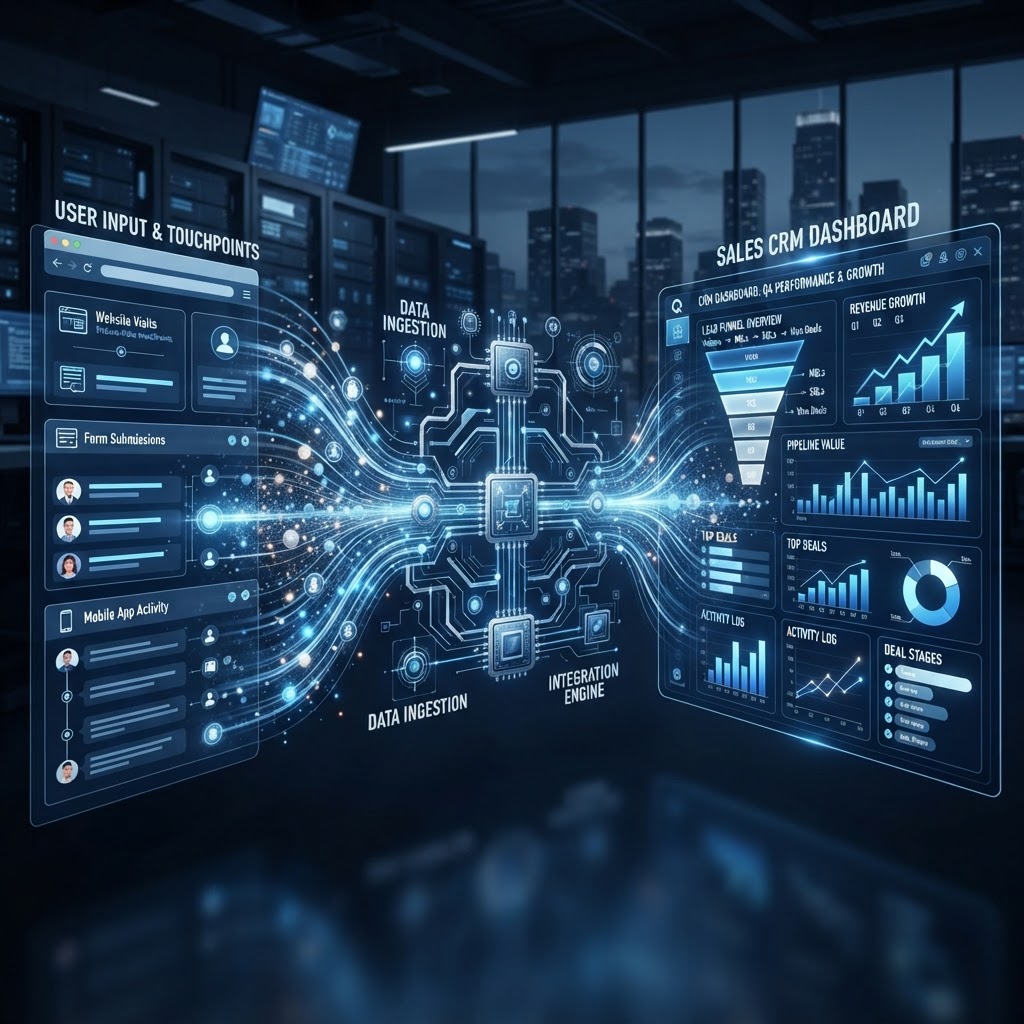
Discover how B2B SaaS companies are scaling revenue by bridging the gap between self-serve product usage and high-ticket sales through engineered Product-Led Sales (PLS) frameworks and behavioral data pipelines.
The Hybrid Growth Engine: Engineering Product-Led Sales (PLS) for Complex B2B SaaS Landscapes
In the current B2B SaaS ecosystem, the binary choice between 'sales-led' and 'product-led' growth is no longer sufficient. As market dynamics shift toward efficiency, organizations in SaaS, manufacturing, and healthcare are discovering that the most sustainable growth happens at the intersection of these two methodologies. This is the realm of Product-Led Sales (PLS)—a hybrid engine that leverages product usage data to inform, trigger, and close high-value enterprise deals. At 1976.cloud, we view this transition not merely as a shift in sales tactics, but as a fundamental engineering challenge. Building a PLS engine requires a sophisticated data infrastructure that transforms user behavior into actionable revenue intelligence.
Beyond the Freemium Mirage: The Rise of Product-Led Sales
For years, the 'Product-Led Growth Playbook' was simplified to offering a freemium tier and waiting for users to upgrade. However, OpenView’s 2023 SaaS Benchmarks reveal a more nuanced reality: while PLG drives top-of-funnel volume, it often fails to convert large-scale enterprise contracts without human intervention. The gap between a single user finding value and a department-wide procurement decision is vast. This is where Product-Led Sales becomes essential. PLS is the strategic process of using product engagement as the primary qualification for sales outreach. Rather than cold-calling prospects based on a job title, sales teams engage with 'Product Qualified Leads' (PQLs)—users who have already demonstrated the value of the software through their actions. For B2B SaaS growth, this represents a shift from guessing intent to measuring reality.
Engineering the 'Aha! Moment': Identifying PQLs Through Behavioral Data
The foundation of a successful PLS strategy is the identification of the 'Aha! moment'—the specific sequence of actions that correlates with long-term retention and high conversion potential. Relying on vanity metrics like login frequency or whitepaper downloads is a common pitfall. To build a true hybrid growth engine, we must engineer event-tracking frameworks that capture high-intent behaviors. For a healthcare SaaS, this might be the first time a clinician successfully integrates a patient record system. For a manufacturing platform, it could be the moment a plant manager generates their first predictive maintenance report. At 1976.cloud, we work shoulder-to-shoulder with engineering teams to implement granular event tracking. By mapping the SaaS acquisition journey against behavioral milestones, we can define PQLs with mathematical precision. When a user hits these triggers, it signifies they have moved beyond exploration into the value-realization phase, making them prime candidates for sales-assisted expansion.
Bridging Data Silos: Creating a Single Source of Truth
One of the greatest risks to B2B SaaS growth is technical debt resulting from fragmented data. Sales teams live in the CRM (like Salesforce or HubSpot), while product teams live in analytics platforms (like Mixpanel or Amplitude), and marketing teams live in automation suites. When these systems don't communicate, the 'Single Source of Truth' vanishes, and revenue attribution becomes impossible. To solve this, 1976.cloud specializes in engineering data pipelines that sync product usage data directly into the CRM. This allows sales reps to see exactly which features a prospect is using, where they are getting stuck, and what business problems they are trying to solve before the first discovery call is even booked. By eliminating these silos, we provide the visibility necessary to attribute revenue not just to a marketing campaign, but to specific product features and user behaviors.
Lifecycle Nurturing through Engineered In-App Triggers
Effective lifecycle nurturing in a PLS model is proactive, not reactive. Instead of generic email blasts, a hybrid growth engine uses engineered in-app triggers to guide the user journey. If a user in a B2B SaaS environment reaches 80% of their data limit, an automated sequence should trigger a contextual message offering an enterprise upgrade, while simultaneously alerting a success manager to reach out. This level of automation requires a deep collaboration between creative, strategy, and execution teams. By automating the low-level nurturing, your human capital—the sales and success teams—can focus on high-ticket outreach where personalized strategy is required. This synergy reduces the friction in the SaaS acquisition journey, ensuring that users receive the right intervention at exactly the right time.
Optimizing the Financials: Reducing CAC and Scaling LTV
The ultimate goal of engineering a PLS framework is financial efficiency. Gartner’s research on the B2B buying journey highlights that modern buyers spend only 17% of their time meeting with potential suppliers. The rest of their time is spent independently researching or using the product. By focusing sales efforts on PQLs who have already derived measurable value, organizations can drastically reduce their Customer Acquisition Cost (CAC). You are no longer paying your highest-cost resources to educate the market; you are paying them to close deals that are already 'warm' due to product engagement. Furthermore, this data-backed approach increases Lifetime Value (LTV) by ensuring that customers are placed on the correct tier and receive the support they need to expand their usage over time.
Partnering for Strategic Growth: The 1976.cloud Advantage
Transitioning to a Product-Led Sales model is a complex undertaking that requires more than just new software—it requires a partner who understands the technical infrastructure and the strategic implications of data-driven growth. At 1976.cloud, we deliver cutting-edge digital marketing and engineering solutions that drive real results for B2B SaaS, manufacturing, and healthcare companies. We don't just provide recommendations; we embed into your workflows to build the data pipelines, event-tracking frameworks, and automated sequences that bridge the gap between self-serve usage and enterprise revenue. Our approach is collaborative and data-backed, ensuring that every move you make is optimized for long-term success. Ready to engineer your hybrid growth engine? Get Started Today at https://1976.cloud.